
Green Finance: Driving Sustainable Growth Through Responsible Investment
Green Finance is no longer a niche concept — it’s a strategic imperative. At its core, it represents a paradigm shift in how capital is mobilized to drive environmental stewardship, climate resilience, and sustainable development. By embedding ecological and social criteria into financial decision-making, Green Finance redefines the relationship between profitability and responsibility, ensuring that economic progress enhances — rather than exploits — the planet’s natural systems. This approach empowers businesses, governments, and investors to unlock long-term value while actively contributing to a low-carbon, resource-efficient future. As global markets evolve, Green Finance stands at the intersection of innovation and impact, laying the foundation for a resilient economy that grows in sync with environmental integrity.
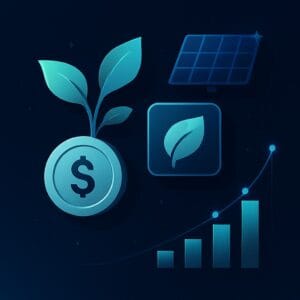
What is Green Finance?
Green Finance refers to financial products, services, and policies that support environmentally sustainable outcomes. It covers a wide spectrum of activities, including:
Why Green Finance Matters
The urgency of climate change and environmental degradation makes Green Finance essential. Its importance lies in:
Key Instruments of Green Finance
| Instrument | Purpose | Example |
|---|---|---|
| Green Bonds | Raise funds for eco-projects | Government bonds funding solar farms |
| Sustainability-Linked Loans | Tie interest rates to ESG performance | Corporate loans linked to emission targets |
| Carbon Credits | Incentivize emission reductions | Companies trading credits to offset carbon footprint |
| Green Mutual Funds | Invest in eco-conscious firms | Funds focusing on renewable energy companies |
Global Trends in Green Finance
The Future of Green Finance

The future of finance is green. Accelerating the transition to net‑zero economies is no longer optional; instead, it is a global imperative that drives sustainable growth. Moreover, innovation in renewable energy, electric mobility, and sustainable housing is reshaping industries and creating new opportunities for businesses and communities worldwide. In addition, expanding access to green capital for developing nations ensures inclusive growth, empowering emerging markets to participate in a sustainable future. Ultimately, embedding sustainability into mainstream finance makes responsible investing the default rather than the exception, aligning profitability with environmental and social responsibility.