
Build the Future of Finance with DeFi Tools
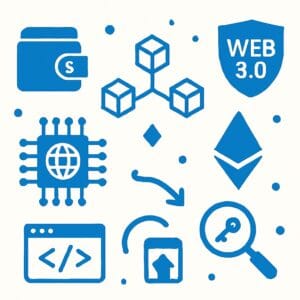
DeFi and Web3 tooling refers to the ecosystem of software, APIs, and infrastructure services that enable developers and end users to interact with blockchain networks without operating full nodes or rebuilding foundational components. These tools abstract the underlying complexity of decentralized systems — from key management and transaction routing to data indexing and cross‑chain communication — so teams can focus on product logic, security, and user experience. A modern Web3 stack typically integrates client‑side interfaces such as wallets and SDKs, middleware like node providers and indexers, and protocol‑level primitives including oracles, decentralized exchanges, lending protocols, and bridges. Together, these layers create a cohesive environment that supports end‑to‑end workflows for trading, lending, payments, asset management, and the development of composable smart‑contract applications, enabling scalable, secure, and intuitive decentralized products.
Core Tool Categories
Wallets
Wallets are the primary user interface to Web3—they manage keys, sign transactions, and connect to dApps. Popular wallet types are browser extensions, mobile wallets, and hardware wallets; each balances convenience and security differently.
Decentralized Exchanges and Aggregators
DEXs enable on chain token swaps without intermediaries. Aggregators and routing APIs optimize for lowest slippage and best price across many liquidity sources, which is essential for user experience and cost efficiency.
Bridges and Cross Chain Messaging
Bridges and cross chain protocols enable token and message transfer between chains. Modern solutions focus on security, composability, and native UX for rollups and L2s, reducing friction for multi chain dApps.
Oracles and Data Feeds
Oracles deliver off chain data (prices, events) to smart contracts. Reliable oracle networks are critical for DeFi primitives like lending, derivatives, and stablecoins, and must prioritize decentralization and economic incentives to avoid manipulation.
Developer Platforms and Node Provider
Node and API providers remove the burden of running infrastructure. Services like node-as-a-service and indexing APIs let teams focus on product logic rather than chain ops, speeding development and improving reliability.
Analytics, Monitoring, and Indexing
Blockchain indexing and analytics tools provide real time and historical data for dashboards, compliance, and trading strategies. Enterprise offerings support data export to warehouses and real time event monitoring for alerts and automation
Security and Auditing Tools
Security tooling includes static analyzers, fuzzers, and audit frameworks. Automated scanners plus manual audits reduce smart contract risk, while runtime monitoring catches anomalies post-deployment.
Strategic Approach to Tool Selection
Risks and Mitigations
Risks in decentralized systems often stem from technical and human factors, including smart contract bugs that can lock or drain funds, bridge exploits that compromise cross‑chain transfers, oracle manipulation that distorts price feeds or external data, and UX pitfalls that confuse users and lead to costly mistakes. To mitigate these risks, teams should prioritize rigorous code audits and formal verification, rely on well‑established bridges and oracles with proven security models, implement layered monitoring and fail‑safes, and design user interfaces that emphasize clarity, error prevention, and guided workflows. Together, these practices reduce systemic vulnerabilities while building trust and resilience in the overall ecosystem.